Site photo
 Back to results
Tea Room / Important Cultural Property
Chōshū-kaku
ちょうしゅうかく
An Important Cultural Property at Sankeien, an elegant pavilion by a stream said to come from Nijō Castle; open.
Said to have been built in 1623 inside Nijō Castle in Kyoto for Shogun Tokugawa Iemitsu's visit to the capital, it is an Important Cultural Property. Family tradition holds that it was later given to Iemitsu's wet nurse, Kasuga no Tsubone, and moved to the Edo residence of the Inaba family into which she had married. Its design is attributed to Sakuma Shōgen of the shogunate's works office. Before its move it was called Sankasa-kaku.
It came to Sankeien in 1922, when Hara Sankei renamed it Chōshūkaku, "pavilion for listening to autumn," and landscaped its surroundings for autumn colour; its arrival is said to have completed the garden.
Its playful details include a railing cantilevered over the stream on bracket sets, an entrance floor of wooden boards laid at 45 degrees so the grain becomes a pattern, and an alcove turned at 45 degrees. The ceiling design shifts with its position relative to the alcove, the staircase curves to avoid the tea-room entrance, and the sliding doors bear gold hollyhock leaves recalling the Tokugawa. The interior is usually closed; the exterior can be viewed from the garden.
GalleryGallery


How to experience itVisit & use
The exterior can be seen with garden admission. The interior is usually closed, and it is not among Sankeien's rental facilities.
Visitor informationInformation
| Address | 58-1 Honmoku Sannotani, Naka-ku, Yokohama (Sankeien) |
|---|---|
| Hours | 9:00–17:00 (last entry 30 min before closing) |
| Closed | December 26–31 |
| Admission | Adults (high school and up) ¥900, elementary/junior high ¥200, Yokohama residents 65+ ¥700 |
| Access | By bus from Yokohama Station (East Exit), Sakuragichō, Motomachi-Chūkagai or Negishi stations |
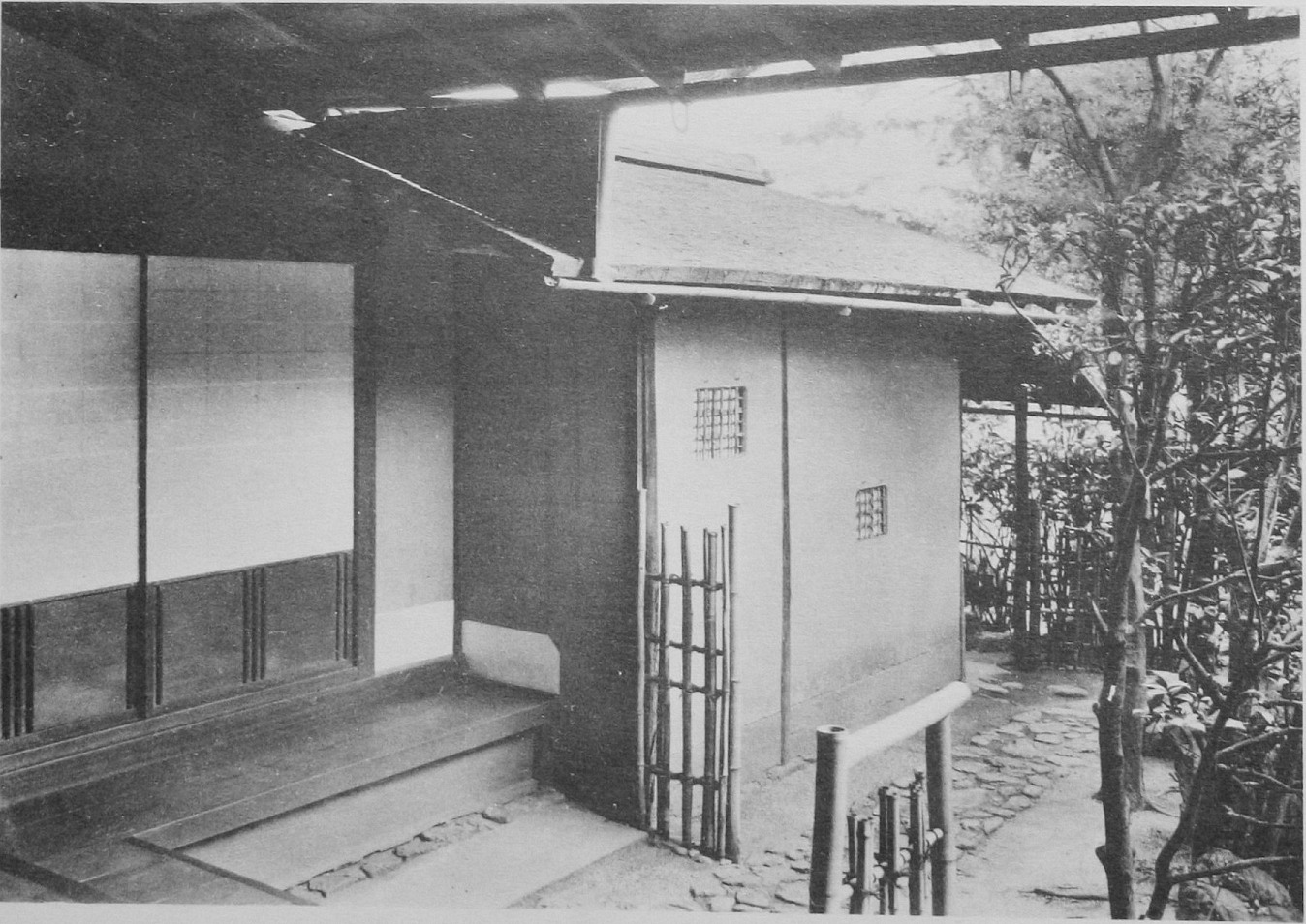
Photo: Sankei-en — the site where this tea room stands, not the room itself. Wikimedia Commons / CC BY-SA 3.0 / Urashimataro
Build a tea room like Chōshū-kaku
Compare sukiya builders and architects with their past work.