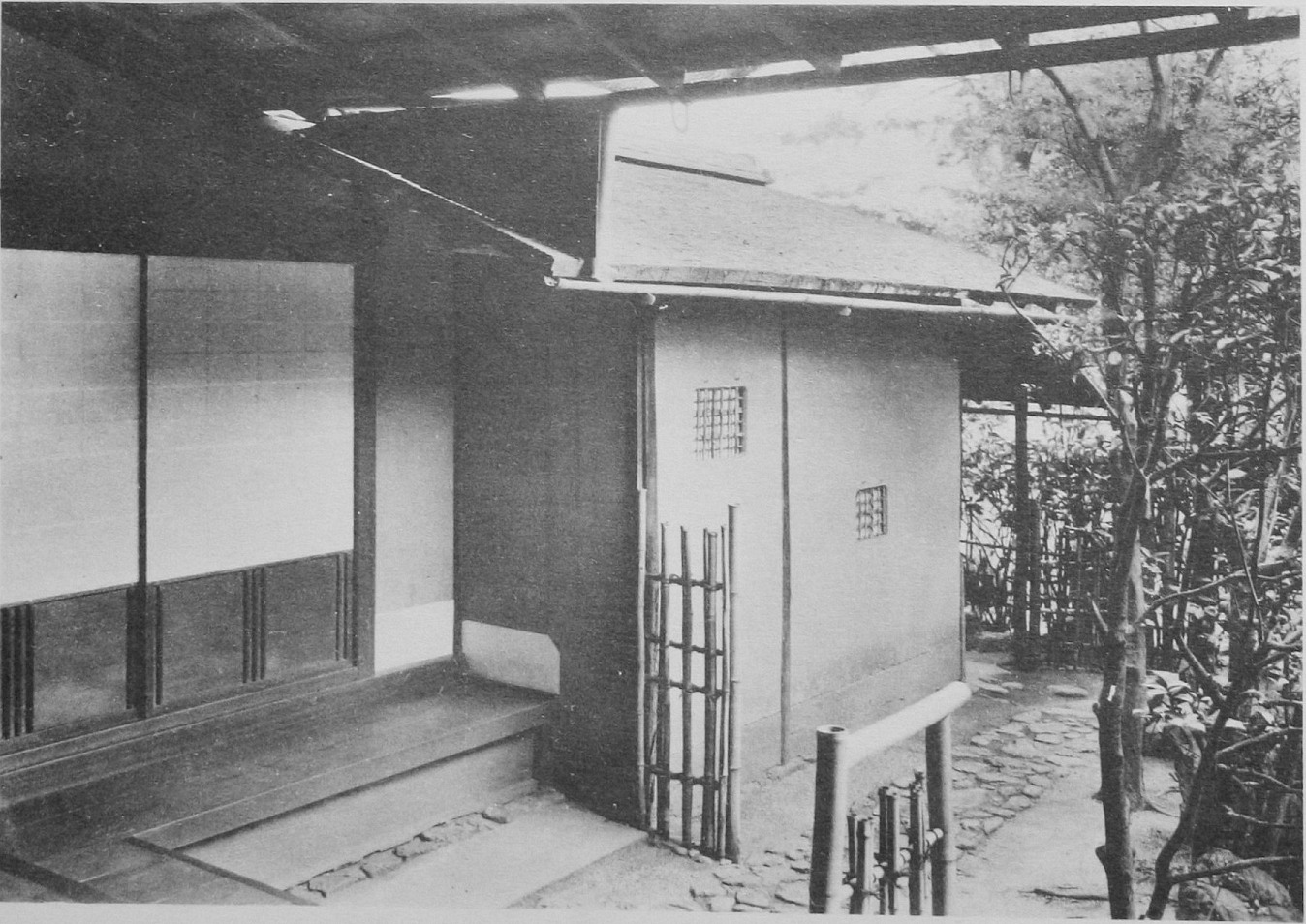
Site photo
Back to results
Tea Room / Within Isuien, a Scenic Spot
Seishū-an
せいしゅうあん
A copy of Urasenke's Yūin in Isuien garden next to Tōdai-ji, made under the guidance of the 12th Urasenke head Yūmyōsai, with a slender yōji-bashira post that makes the room feel larger.
Seishū-an copies Urasenke's Yūin, an Important Cultural Property, and was built under the guidance of Yūmyōsai, 12th head of Urasenke. Its slender yōji-bashira post is a device that makes the room feel larger.
Isuien has other tea buildings too. Sanshūtei was moved here as a villa in the early Edo period by Kiyosumi Dōsei, a dealer in Nara bleached linen. Hyōshintei is a Meiji-era shoin-style tea room whose ceiling boards include Tenpyō-era timber from Shin-Yakushi-ji; poetry gatherings were held there along with tea. Teishūken is a sencha room built by Kiyosumi Dōsei in the Enpō era; in the Meiji period Seki Tōjirō added a veranda so it could also serve as a waiting room for Urasenke-style tea. It is known for its round window.
Yagyū-dō, a hall from Hōtoku-ji, the Yagyū clan's family temple, was also bought by Seki Tōjirō in the Meiji period and moved into the garden.
How to experience itVisit & use
Sanshūtei (restaurant Sanshū) serves meals and matcha (¥1,200), and matcha can be enjoyed at Hyōshintei overlooking the rear garden. The official site gives no information on entering or renting Seishū-an.
Visitor informationInformation
| Address | 74 Suimon-chō, Nara |
|---|---|
| Hours | 9:30–16:30 (last entry 16:00) |
| Closed | Tuesdays (next weekday if a holiday); garden maintenance periods (late Dec–mid-Jan, late Sep) |
| Admission | ¥1,200 adults, ¥500 high-school/university, ¥300 elementary/junior high (includes Neiraku Museum) |
| Access | About 15 min walk from Kintetsu Nara Station (west of Tōdai-ji); no parking |
Sources (checked 2026年10月)
Tea Room
Interior
Garden
Images are placeholders — no photographs of the cultural properties are shown
Build a tea room like Seishū-an
Compare sukiya builders and architects with their past work.