CHASHITSUTOKYO
Matsubun Shoten
Back to builders
Builder / Materials & build

Matsubun Shoten

Kyoto

A specialist in fine timber and sukiya materials that also undertakes construction.

Tap 'Visit official site' to go to this company's own website. Please send inquiries and quote requests directly through their channels.

Source: matubun.co.jp

Founded in the Ansei era in what is now Takagamine, Kita Ward, Kyoto, to produce timber and polished Kitayama logs, the firm has kept the family trade for over a century and a half. Using traditional Kitayama methods — from cuttings and planting to pruning, felling, peeling, sand polishing and drying — it raises each polished log over about 30 years.

Its supply record goes back to the shoin and tea room of Hogon-in at Tenryu-ji in the Taisho era and includes renovation of the Katsura Imperial Villa (1979–1990), the Japanese dining wing of the Kyoto State Guest House, the Nakanoshima Gen-an tea room at the Nakanoshima Kosetsu Museum and the restoration of Shorin-an at Ninna-ji.

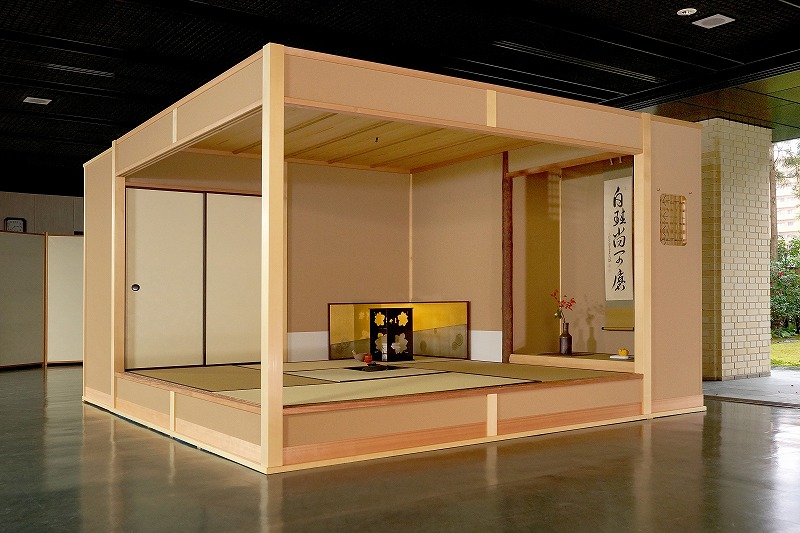
In the shop are two model rooms — an eight-mat tea room based on the Omotesenke practice room Shofu-ro, and a ryurei (table-style) tea room — where you can touch the actual materials while you consult. Beyond selling timber it advises on tea-room layout, design and materials, earthen walls and fittings, and can introduce builders.

Fine timberSukiya materialsConstruction

ProjectsCase studies

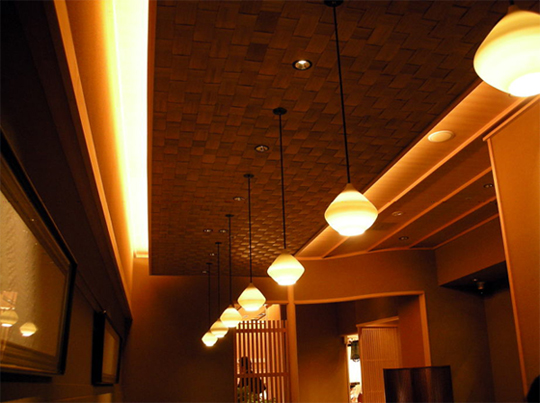
Sukiya-style confectionery shop
Osaka

Sukiya-style confectionery shop

Advised a shop designer on sukiya design and fine timber. With special permission from the fire department, the ceiling was lined with Kurobe split-cedar checkered wickerwork; the name board is Kirishima cedar with bamboo-leaf grain and the skirting is chestnut with a tortoiseshell adze finish.

View on official site ↗
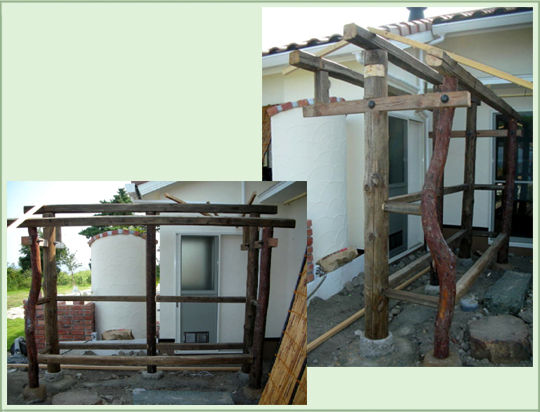
Garden path and waiting bench for a home tea room
Kyoto

Garden path and waiting bench for a home tea room

The owner had been building the garden path and waiting bench himself; Matsubun took over and finished the work while keeping what he had done. The result is a rustic bench roofed in cedar bark, ready for the room's opening gathering.

View on official site ↗
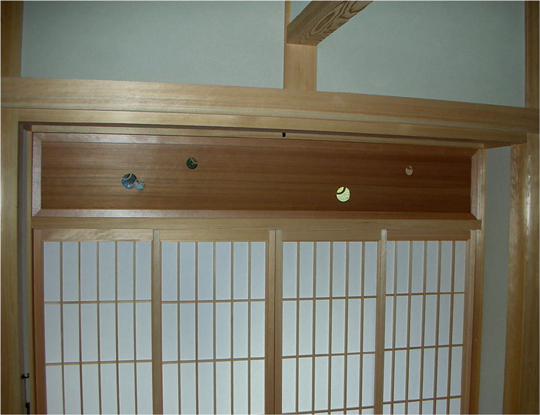
Transoms for a sukiya-style house
Awaji, Hyōgo

Transoms for a sukiya-style house

For the opening between a nine-mat shoin room and a four-mat room, Matsubun proposed and made a transom of alternating paulownia and red-cedar fans, plus a pierced transom with a tsubotsubo pattern for the shoin.

View on official site ↗
昭和15〜16年 · Kyoto

Ōkōchi Sansō, new wing (timber supply)

Listed in the firm's supply record.

View on official site ↗
昭和40〜41年 · Tokyo

Kan'un-tei, Omotesenke tea hall, Tokyo (timber supply)

Listed in the firm's supply record.

View on official site ↗
平成2年 · Izumo, Shimane

Restoration of Dokuraku-an, Izumo (timber supply)

Listed in the firm's supply record.

View on official site ↗
平成16年 · Kyoto

Restoration of Jōsoku-tei, Kinkaku-ji (timber supply)

Listed in the firm's supply record.

View on official site ↗
令和3〜5年 · Hakone, Kanagawa

Repair of Sangetsu-an, Hakone Museum of Art (timber supply)

Listed in the firm's supply record.

View on official site ↗

Photos: Matsubun Shoten official website

Materials in the two model roomsMaterials in the two model rooms

The eight-mat room uses a naturally crinkled Kitayama log for the alcove post and Yoshino red cedar for the alcove lintel, with resinous San'in pine for the biwa-doko and shoin boards. All ceiling boards are 8-sun-wide Kurobe cedar, and the walls are Jurakudai clay. The garden is a Kyoto townhouse courtyard with a stone lantern and water basin.

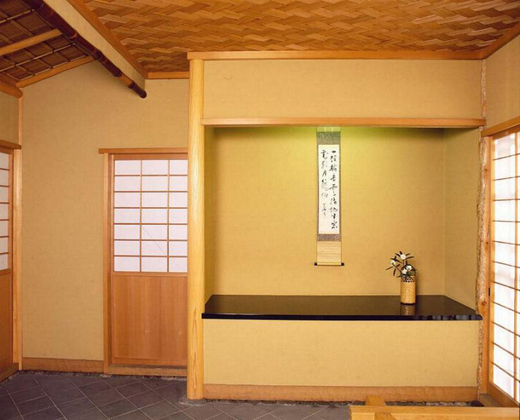
The table-style room doubles as a meeting room. Its alcove post is a Kitayama log with a rusted-hinoki partner post, the floor is tile, the flat ceiling is Kurobe cedar herringbone wickerwork, and the sloping ceiling is Kurobe board with medake bamboo laths.

What you can consult aboutWhat you can consult about

Matsubun helps when a builder or architect is already chosen — with design, material combinations, dimensions and prices — and when you cannot find a carpenter for fine timber, a plasterer for juraku walls or a Kyoto joiner.

It also welcomes people who do not yet know where to start, and non-building questions after completion, such as hearth frames, kekkai partitions, portable alcoves, transoms or what ash to use in the hearth.

From the FAQFrom the FAQ

Q. Can a Japanese room become a simple tea room? / A. Laying the tatami for tea and cutting a hearth makes it usable; with space for a mizuya it works fully. Hearths range from proper clay-lined ones to electric ones, to suit the budget.

Q. Do I need to book the showroom? / A. The model rooms are open on business days, 8:30–18:00, except Sundays, holidays and the 2nd and 4th Saturdays. Calling ahead is appreciated as staff may be out.

Q. Do you serve distant or overseas clients? / A. Goods can be shipped, for example to the Kanto region; the firm covers all of Japan and also handles overseas clients and destinations.

GalleryGallery

The eight-mat model tea room
Transom of straight-grain paulownia pierced with young pines
Shoin transom in red cedar with kōzama openwork
Flat and sloping ceilings in Kurobe cedar boards
Alcove post of naturally crinkled Kitayama log and lacquered alcove frame
The mizuya with a through shelf and tea-bowl shelf
Alcove of the table-style model tea room
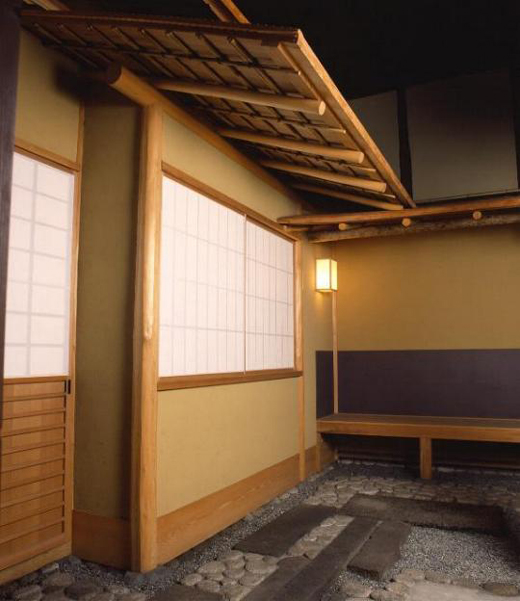
Exterior of the table-style tea room with a stone-and-gravel path and bench

Photos: Matsubun Shoten official website

ServicesWhat they do

  • Production and sale of polished, shibori and sabi Kitayama logs
  • Fine timber: alcove posts, frames, lintels, ceiling boards, red-cedar fittings
  • Tea-room materials: ajiro, noneita boards, fine bamboo, shitaji windows
  • Tea-room metal fittings
  • Advice on tea-room layout, design and materials; introduction of builders
  • Quotes and custom pieces for builders and architects

Selected worksWorks

  • Shoin and tea room of Hogon-in, Tenryu-ji (1919–1920)
  • Waraku-an tea room in Seiryu-en, Nijo Castle (1962–1963)
  • Renovation of the Katsura Imperial Villa: shoin, Shokin-tei, Shoi-ken, Geppa-ro and more (1979–1990)
  • Japanese dining wing, Kyoto State Guest House (2002–2003)
  • Nakanoshima Gen-an tea room, Nakanoshima Kosetsu Museum (2016)
  • Restoration of Shorin-an, Ninna-ji (2017)
  • Reconstruction of the Yoho tea room, Ninomaru Garden, Nagoya Castle (2023)
  • Sukiya-style interior of a Japanese sweet shop in Osaka (Kurobe split-board ajiro, Kirishima cedar board, chestnut naguri board)

Company profileProfile

CompanyMatsubun Shoten Co., Ltd.
Address487 Hanaguruma-cho (Senbon-dori Kamidachiuri-agaru), Kamigyo Ward, Kyoto 602-8305
Founded1859
RepresentativeEiji Yoshimura
BusinessProduction and sale of polished Kitayama logs, fine timber and tea-room materials; advice on tea-room materials and design
Phone+81-75-463-0275
Fax+81-75-464-3584
SpecialtyIntegrated from planting Kitayama cedar to sale; model eight-mat and ryurei tea rooms

Companies wishing to edit or remove this listing: info@melety.com

More builders
View all
Builder
Gero, Gifu
1995年設立
Unit roomKit / Unit
Quote on request
Millième
Kyoto
Assembly kitKit / Unit
Approx. ¥3.3M–4.18M