 Back to results
Tea Room / Kyoto
Fushin-an
ふしんあん
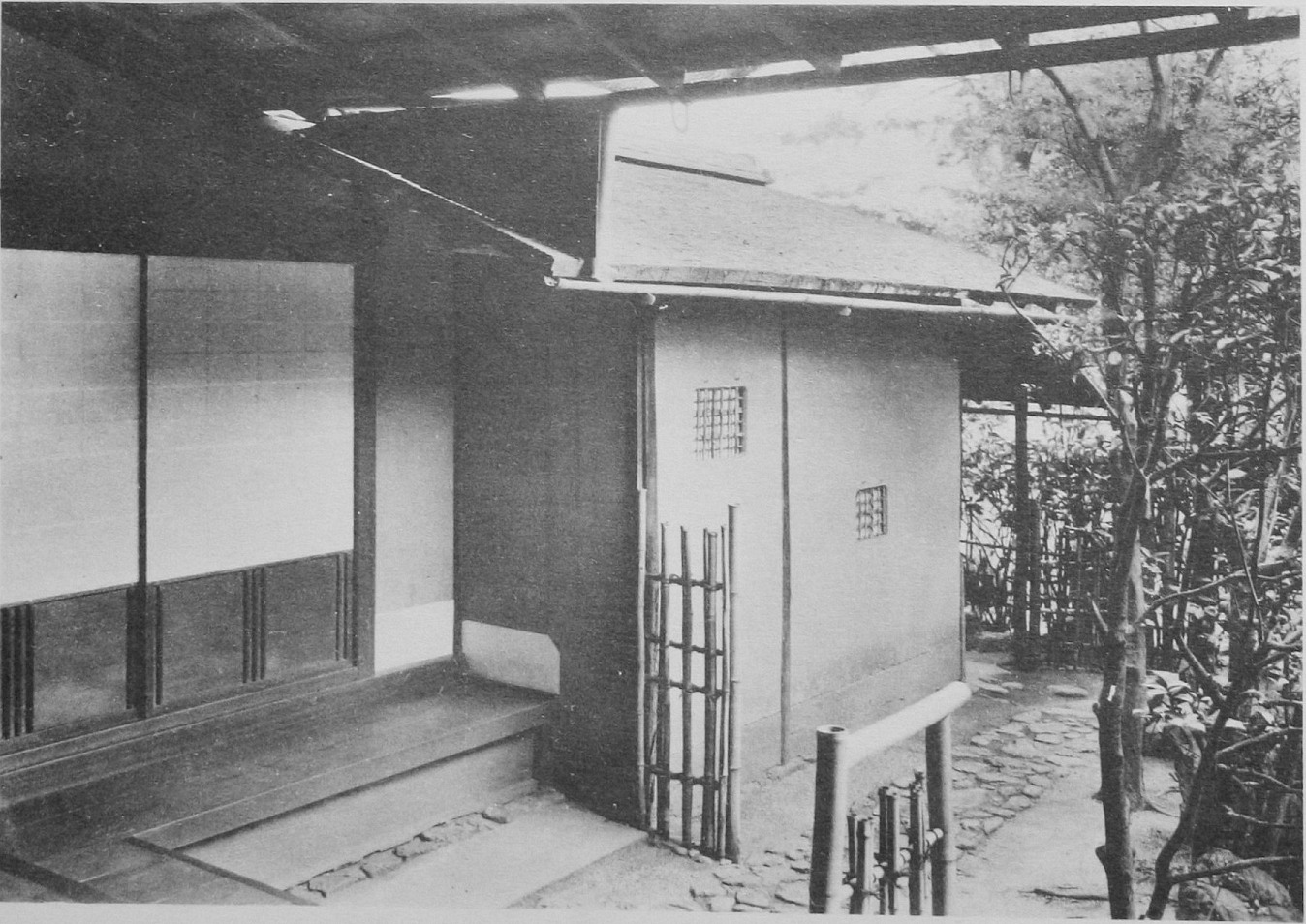
Omotesenke's emblematic room, three mats and a daime mat. Its form goes back to the room Kōshin built in 1646; the present building dates from 1913. Private.
Omotesenke's emblematic tea room. "Fushin-an" was the name of a tea room Rikyū kept, and it also names the Sen family residence and organisation as a whole and the head of the school. The name comes from a verse by Kokei, a priest of Daitoku-ji.
Sen Sōtan made a one-and-a-half-mat room with even the alcove removed, called it Fushin-an and made it the symbol of the Sen family's tea. In 1646 his son Kōshin Sōsa, who inherited it, rebuilt it as a three-mat-plus-daime room — the prototype of today's room. The present building was rebuilt in 1913 after a fire in 1906.
The crawl-in entrance is at the right corner; a red-pine centre post with its bark stands between host and guests, and the sleeve wall, crossed by a bamboo rail, is left open below. The daime-width alcove faces the entrance, with the service door beside it.
A private room of the head family; not open to the public.
Photo: front gate of the Omotesenke Fushin'an estate — the site where this tea room stands, not the room itself. Wikimedia Commons / CC BY-SA 4.0 / Gretchen Mittwer
Build a tea room like Fushin-an
Compare sukiya builders and architects with their past work.
近くの名席Nearby rooms
View all  Site photo
 Site photo