Back to results
Tea Room / Important Cultural Property (Urasenke Residence)
Yū-in
ゆういん
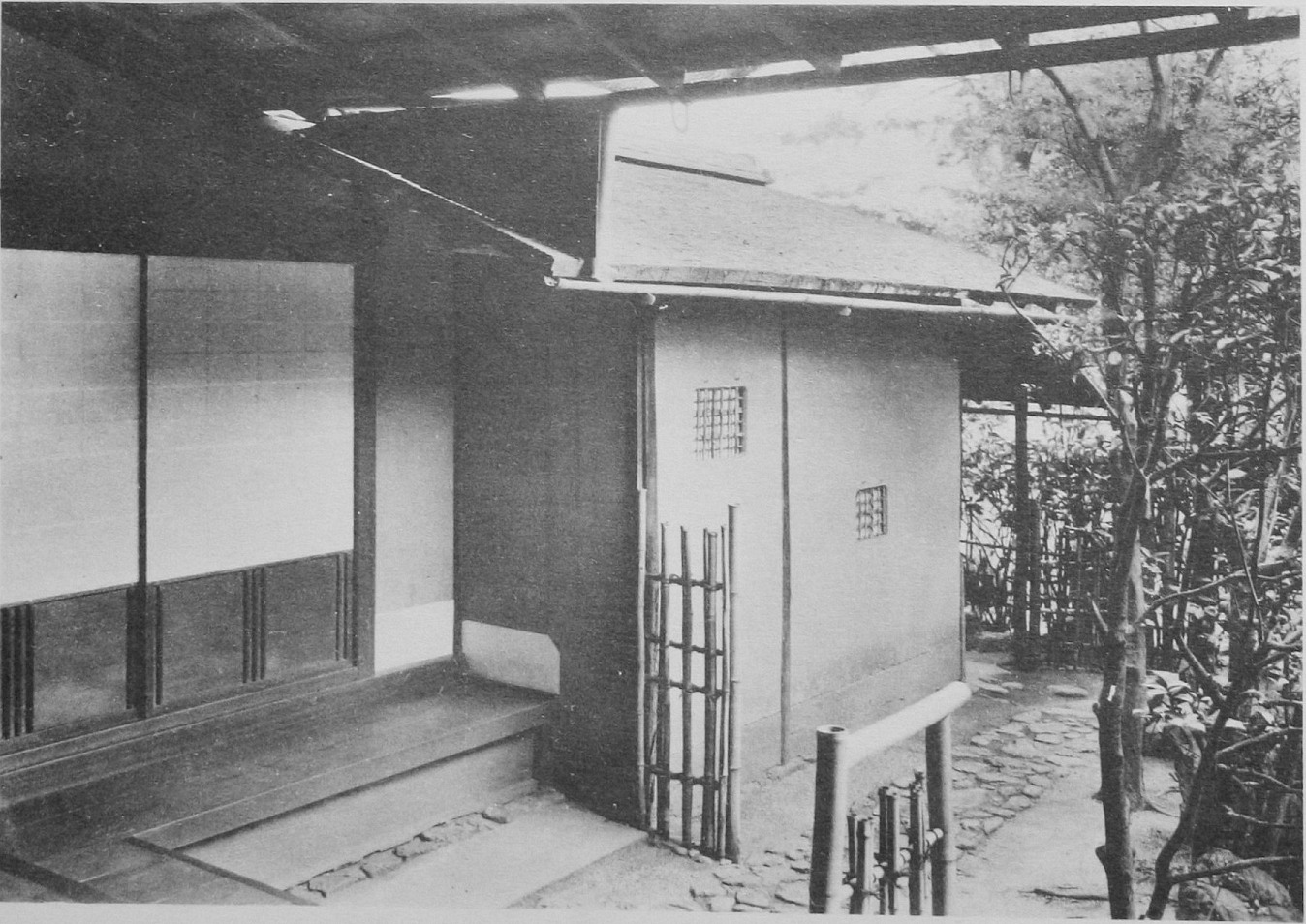
Sen Sōtan's four-and-a-half-mat room at Urasenke, with few windows and a low ceiling. Part of the Urasenke Residence, an Important Cultural Property; private.
A four-and-a-half-mat tea room at Urasenke. Sen Sōtan built it when he retired a second time, after building Konnichi-an — hence the name Yū-in, "retired again." According to Kyoto Prefecture, it was first used in 1653 and rebuilt in 1789. It is part of the "Urasenke Residence," designated an Important Cultural Property in 1976, and the Agency for Cultural Affairs describes it, with Konnichi-an, as Urasenke's most important tea room.
With its thatched hip-and-gable roof and a push-up skylight in the eaves, it is regarded as a model four-and-a-half-mat tea room. Few windows, a low ceiling and a corner post left only partly visible and otherwise plastered over (yōji-bashira) deepen its wabi character. The stepping stones before the crawl-in entrance, attributed to Sōtan, are known as the "bean-scattering stones," and the daime-width alcove faces the entrance.
A private room of the head family; not open to the public.
GalleryGallery


Tea Room
Interior
Garden
Images are placeholders — no photographs of the cultural properties are shown
Build a tea room like Yū-in
Compare sukiya builders and architects with their past work.
近くの名席Nearby rooms
View all  Site photo
 Site photo