CHASHITSUTOKYO
Back to builders
Builder / Authentic sukiya

Fujimori Komuten

Chūō, Tokyo

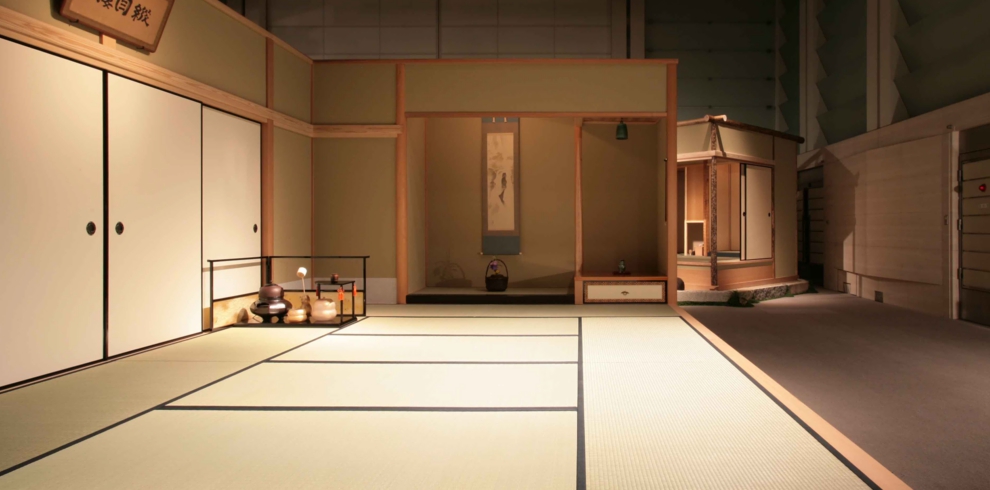
Carrying on the sukiya-master tradition, having built tea rooms for many tea schools.

Tap 'Visit official site' to go to this company's own website. Please send inquiries and quote requests directly through their channels.

Source: sukiya-fujimori.jp

Headquartered in Nihonbashi, Tokyo, this firm carries on the legacy of the Showa-era sukiya master Meihosai Fujimori (1911–1996), with in-house designers and dedicated carpenters handling everything from design to construction.

It works as builder to the iemoto of the Enshu and Sohen schools of tea and has built many tea rooms for other schools as well. For the Enshu school headquarters it built the Seishu-an and other tea rooms, a large room and roji garden (1998–2001); for the Sohen school it carried out two phases of work from 1974 to 1987.

Public and heritage work includes the Kanpu-tei and Seichi-ken sukiya buildings in the Japanese garden of Showa Kinen Park and repairs to Shunso-ro, an Important Cultural Property at Sankeien. Abroad, it built an arbour for the Japanese government garden at IGA 2003 in Germany and assisted a Japanese garden at the 2008 RHS Chelsea Flower Show.

Because cost depends heavily on size, design and materials, it discusses budget and wishes with each client. It recommends that clients choose materials themselves alongside the staff, accepts distant and overseas commissions, and returns for an inspection about a year after handover, with ongoing maintenance after that.

SukiyaTea roomAll schools

ProjectsCase studies

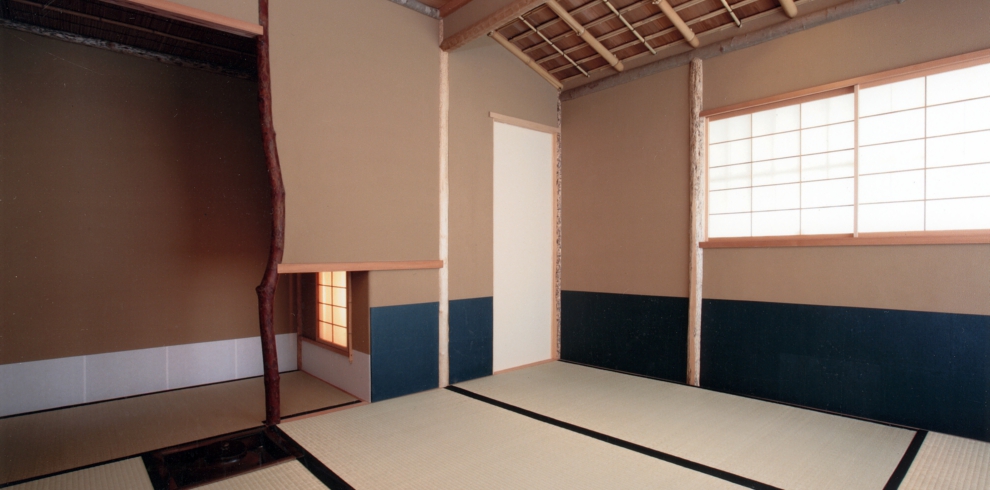
Tea room, M residence
Tokyo (apartment beside a major station)

Tea room, M residence

A tea room for an Urasenke teacher who wanted to practise several hearth layouts in an apartment. Unexpected concrete beams were handled with playful details while keeping the formal-to-informal hierarchy in mind.

View on official site ↗
Tea room, H residence

Tea room, H residence

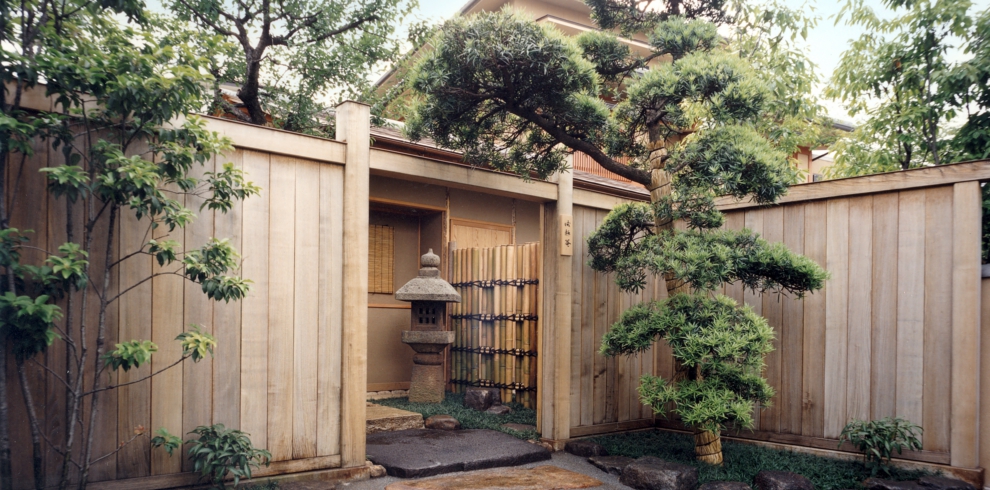
A tea room with garden path designed around the client's love of Korean Joseon-era objects. Ceramic kiln shelves from a pottery were reused as edging around both house and tea room for a unified look.

View on official site ↗
Tea room, I residence

Tea room, I residence

A tea room for one of Tokyo's leading antique tea-utensil dealers, built by a veteran sukiya carpenter together with young craftsmen, with careful eave details and materials.

View on official site ↗
Seiren-tei restoration and extension
2008年〜 · Tokyo

Seiren-tei restoration and extension

A 1962 tea room repaired and extended in two phases from spring 2008: roof repairs and concealed air-conditioning, restoration of the gate, repainting, a new waiting room and a refreshed garden.

View on official site ↗
Preparation room, S residence, Higashihiroshima
Higashihiroshima, Hiroshima

Preparation room, S residence, Higashihiroshima

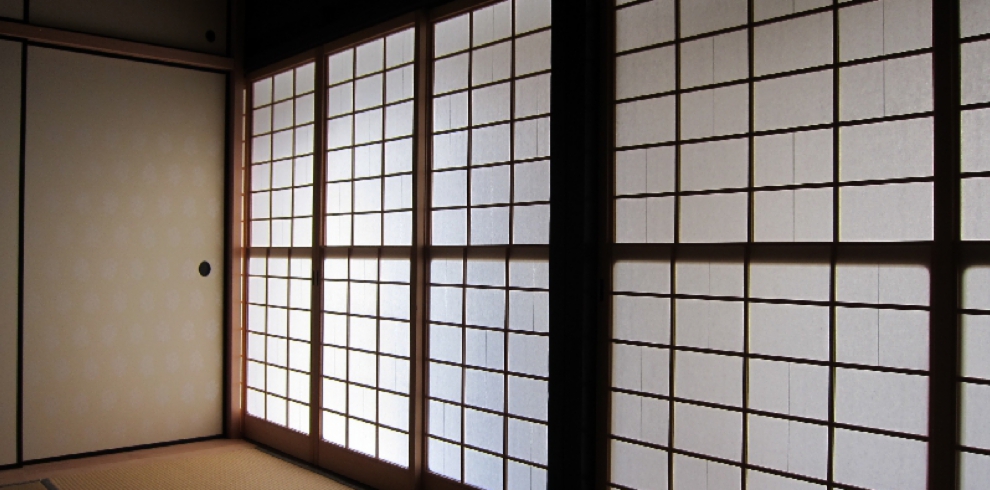
Two mats of a six-mat room were turned into a preparation area; with the sliding doors closed the rooms work as a suite again. The door paper was chosen with the client at Karacho in Kyoto.

View on official site ↗
Enshu school headquarters
1998〜2001年 · Wakamiya-cho

Enshu school headquarters

When the Enshu school moved to Wakamiya-cho, the firm built Seishu-an and other tea rooms, a large room and garden, choosing materials and setting dimensions together with the grand master.

View on official site ↗
Kanpu-tei and Seichi-ken, Showa Kinen Park
1992〜2004年 · Showa Kinen Park

Kanpu-tei and Seichi-ken, Showa Kinen Park

The firm built the sukiya pavilions Kanpu-tei and Seichi-ken and a wooden bridge in the 6-hectare Japanese garden. Kanpu-tei (77.31 tsubo) took over two years, with full-size drawings and visits to where its materials were produced.

View on official site ↗
Shunsō-ro, Sankeien (Important Cultural Property)
Sankeien garden

Shunsō-ro, Sankeien (Important Cultural Property)

Repair of Shunsō-ro (Kyūsō-tei), a Momoyama-period three-and-three-quarter-mat tea room attributed to Oda Urakusai, alongside other cultural properties in the garden such as Rinshunkaku and Gekkaden.

View on official site ↗
Senshin-tei, Aikoku Gakuen

Senshin-tei, Aikoku Gakuen

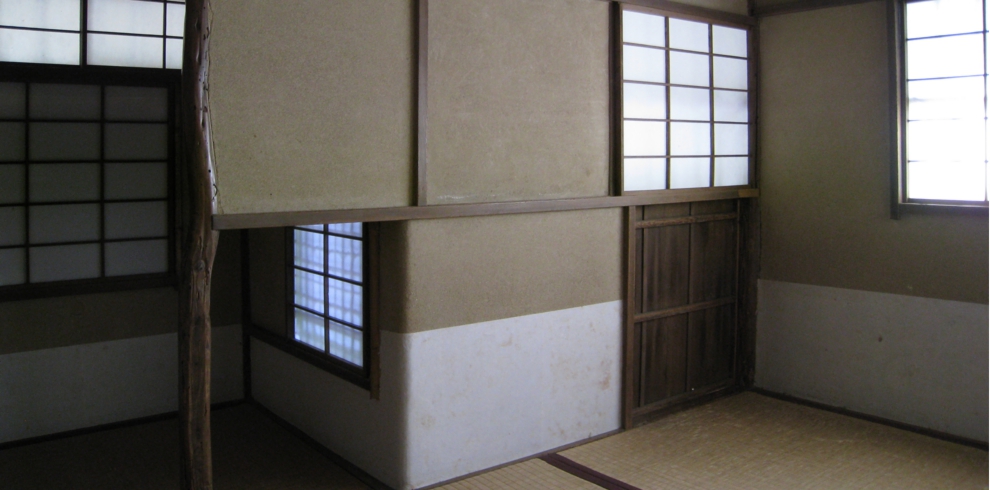
A tea room renowned in the Sohen school, moved from the founder's former home. Leaks had reached the straw-core tatami, so the complex roof was fixed first, then the woodwork and fittings were cleaned and every wall replastered.

View on official site ↗
Tea rooms, N Shokai training facility
Miyoshi, Aichi

Tea rooms, N Shokai training facility

Tea rooms inside a company training facility, supervised by Kobori Sojitsu, 13th grand master of the Enshu school. The client personally visited Yoshino and Kitayama to choose timber, and a fitting piece of pine was found for the biwa shelf.

View on official site ↗
Higashiyama Sansō
Higashiyama, Kyoto

Higashiyama Sansō

A training and staff facility for a Tokyo company, built on a narrow, deep sloping site around an existing garden attributed to Tanaka Taiami; the carpenters stayed in Kyoto for eight months. The third-floor lounge looks out on the Gozan bonfires.

View on official site ↗
Display tea rooms, OZONE Summer Tea Festival 2007
2007年

Display tea rooms, OZONE Summer Tea Festival 2007

The main exhibit of the event: an Enshu-school small room, large room and garden, set up under the grand master's supervision.

View on official site ↗

Photos: Fujimori Komuten official website

Points to considerPoints to consider

Q. What should I watch for when building a tea room? / A. Many things: the setting and circulation, placement of the tea room and preparation room, combinations of timbers, tatami layout—and some conventions are fixed by each school. Guidance from grand masters or teachers is sometimes sought.

Q. Can I see completed work? / A. The firm will show you wherever possible.

Maintaining sukiya buildingsMaintaining sukiya buildings

Post bases, sills and woodwork near water can rot or be eaten by termites within 2–3 years, so prevention—keeping rain off and air moving—is best.

Cypress-bark and shingle roofs need re-roofing after about 30 years; metal roofs should avoid contact between different metals. Taking down gutters before snow is also advised.

Visiting completed workVisiting completed work

Mainly around Kanto, buildings the firm designed and built—public facilities, rental tea rooms, Japanese restaurants and galleries—can be visited, including the Japanese garden at Showa Kinen Park, Mejiro Garden in Toshima, Kyokeikan in Saitama, Kaiseki Ichimonji and Shogetsu.

GalleryGallery

Kaiseki Ichimonji, Kagurazaka
Shogetsu, a long-established restaurant in Oiso
K residence / Gallery Sakuramori (1991)
Chūkō-ji temple after its 2012 seismic renovation
Yasukuni Shrine tea room, restored by lifting and new foundations
M residence tea room
Paulownia bookshelf made for a reception room
Tea room at the Enshu school headquarters

Photos: Fujimori Komuten official website

ServicesWhat they do

  • Design and construction of sukiya and tea rooms
  • Conservation and restoration of historic buildings
  • Tea rooms and Japanese rooms inside offices and apartments
  • Furniture making
  • General construction and interior/exterior work
  • Post-handover inspection and maintenance

Selected worksWorks

  • Sohen school: Gesshin-tei, Shiho-an, Fushin-an, Hokyu-do and Yu-ken (1974–1987)
  • Showa Kinen Park Japanese garden: Kanpu-tei and Seichi-ken (1992–2004)
  • Enshu school headquarters: Seishu-an and other tea rooms, large room and roji (1998–2001)
  • Arbour in the Japanese government garden, IGA 2003 (Rostock, Germany)
  • RHS Chelsea Flower Show 2008 (assisting a Japanese company's garden)
  • Repairs to Shunso-ro (Important Cultural Property), Sankeien
  • Renovation of the Senshin-tei tea room, Aikoku Gakuen
  • Tea room in N Shokai training facility (Miyoshi, Aichi; supervised by Enshu iemoto Kobori Sojitsu)

Company profileProfile

CompanyFujimori Komuten Co., Ltd.
Address7F SG Nihonbashi-honcho, 4-5-13 Nihonbashi-honcho, Chuo-ku, Tokyo
FoundedJune 1946
RepresentativeYuji Uemuki, President
BusinessDesign and construction of sukiya and tea rooms; conservation and restoration of historic buildings; general construction and interior/exterior work
LicensesConstruction license, Tokyo Governor (Special-30) No. 124323; first-class architect office, Tokyo No. 58643
Phone+81-3-3272-2733
Fax+81-3-3272-2734
SpecialtyBuilder to the Enshu-ryu and Sohen-ryu iemoto; lineage of the Showa-era sukiya master Meihosai Fujimori

Companies wishing to edit or remove this listing: info@melety.com

More builders
View all
Builder
Kanagawa
Authentic sukiyaFull custom
Quote on request
Builder
Mukō, KyotoIntl.
Est. 1688(元禄元年と伝わる)
Authentic sukiyaFull custom
Quote on request
Builder
Nishikyō, Kyoto
Est. 1970
Authentic sukiyaFull custom
Quote on request