CHASHITSUTOKYO
Yamamoto Kogyo
Back to builders
Builder / Authentic sukiya

Yamamoto Kogyo

Kyoto

Handles survey, design, construction and maintenance in-house; overseas work includes the tea room “Kohaku” at the Guimet Museum in Paris.

Tap 'Visit official site' to go to this company's own website. Please send inquiries and quote requests directly through their channels.

Source: kyoto-yamamotokogyo.com

Founded in Kyoto in 1965 by Takaaki Yamamoto, who trained under the sukiya master Kaichiro Fuefuki before going independent. Yamamoto was honoured by the Minister of Labour as a "Contemporary Master Craftsman". The company name was given by the chief priest of Kenkun Shrine.

Centred on log-built tea rooms and sukiya, it also builds temples, shrines and wooden houses, and conserves National Treasures and Important Cultural Properties. Sukiya carpenters and architects handle everything from survey and proposal to design, construction and maintenance.

Notable works include the Koshun-an (1998, own design) and Isshi-an (1999) tea rooms at Obai-in, Daitoku-ji; the Kyohaku tea room at the Guimet Museum in Paris (2001); and the ceiling of the Kiri-no-ma at the Kyoto State Guest House (2004). Its current head carpenter, Koji Hozono, has received Kyoto Prefecture's award for outstanding traditional-industry craftsmen.

At Hirano-no-ie Waza Eieito — a 1926 home and studio of the painter Chikusai Yamashita, renovated by the firm — it welcomes visits from people considering a new build or renovation.

SukiyaTea roomEnd-to-endOverseas work

ProjectsCase studies

Kōshun-an tea rooms, Ōbai-in, Daitoku-ji
1998年 · Kita Ward, Kyoto

Kōshun-an tea rooms, Ōbai-in, Daitoku-ji

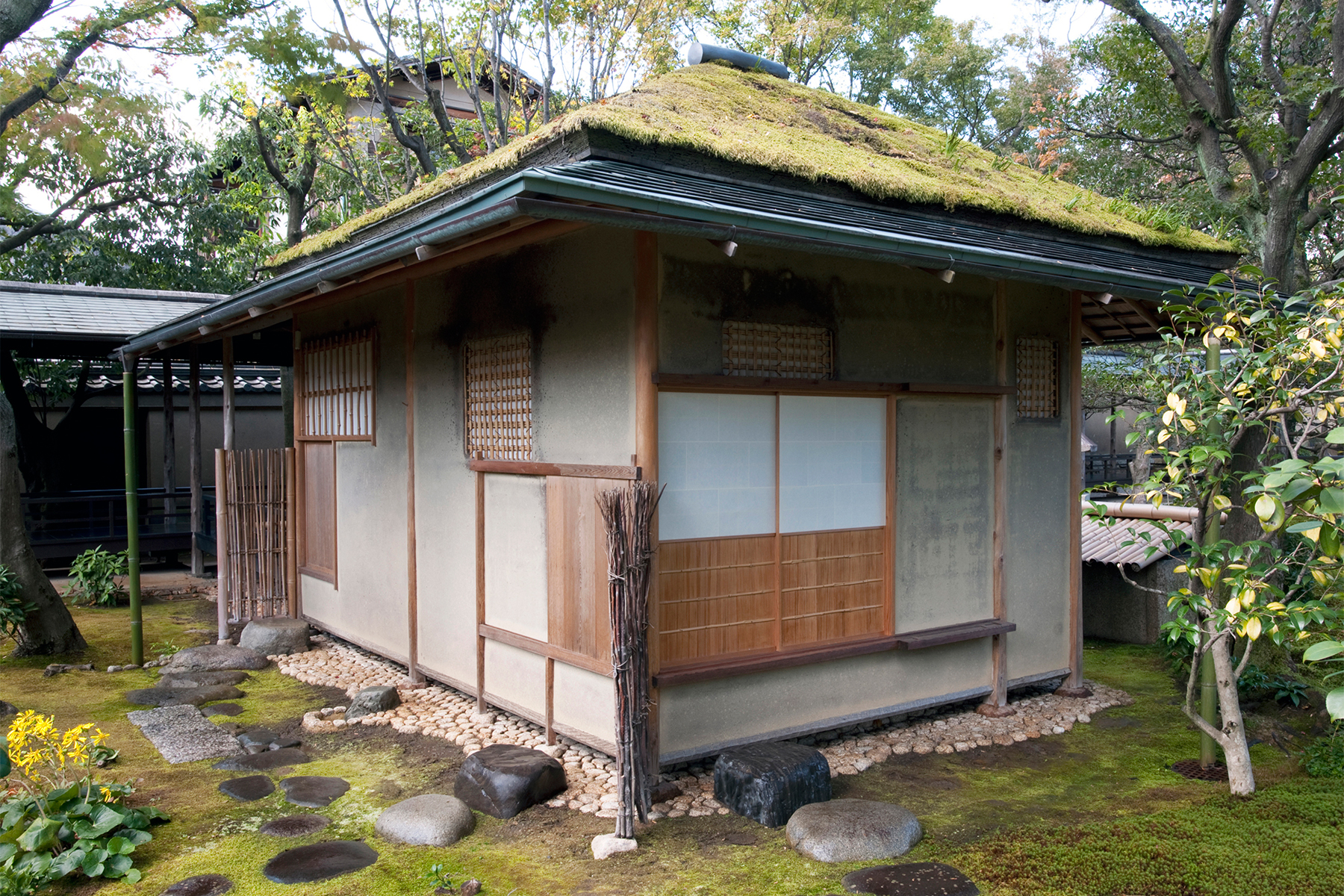
A sukiya addition at Ōbai-in with the five-and-a-half-mat Hōrai-an, the chair-seated Kan-an and the 20-mat Gentoku-ken, linked by a corridor to Isshi-an. Underfloor heating was added to traditional design, and a 1.5 m level change was absorbed with a courtyard and an arched, bridge-like corridor. Designed in-house.

View on official site ↗
Isshi-an tea room, Ōbai-in, Daitoku-ji
1999年 · Kita Ward, Kyoto

Isshi-an tea room, Ōbai-in, Daitoku-ji

A tiny one-and-three-quarter-mat room, the opposite of Kōshun-an. Its alcove post, a polished Kitayama log with a branch, was sought to match the name plaque and fitted perfectly. A room for one host and one guest in the wabi spirit. Designed in-house.

View on official site ↗
Kyohaku tea room, Musée Guimet
2001年 · Paris, France

Kyohaku tea room, Musée Guimet

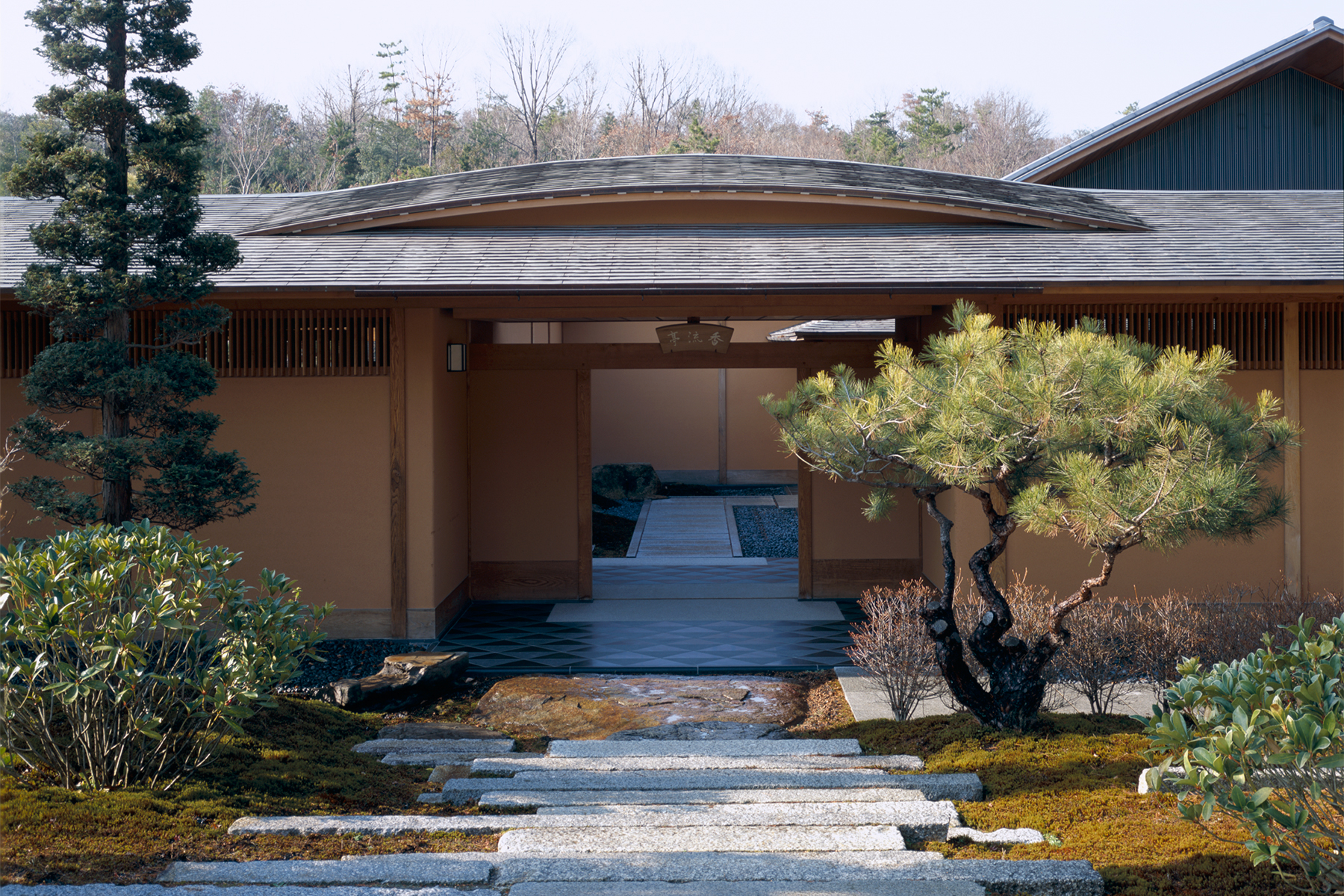
A new tea room in the bamboo garden of the Musée Guimet annex in Paris (design: Masao Nakamura). Fine timber was chosen for a place of Franco-Japanese exchange, and the parts were marked, cut and test-assembled in Japan before being erected on site.

View on official site ↗
Kanare-tei tea house, Expo 2005 Aichi
2004年 · Nagakute, Aichi

Kanare-tei tea house, Expo 2005 Aichi

Built in the Japanese garden of Expo 2005 for international exchange and to introduce young people to Japanese culture (design: Yoshihiro Horio). Bold, unconventional details were realised with sukiya techniques; after the Expo it became a prefectural facility.

View on official site ↗
Ceiling of the Kiri-no-ma, Kyoto State Guest House
2004年 · Kamigyo Ward, Kyoto

Ceiling of the Kiri-no-ma, Kyoto State Guest House

The firm made the ceiling boards for the 56-mat Kiri-no-ma. Yoshino cedar boards 12 m long and 500 mm wide, said to be impossible to source, were cut from a standing tree about 280 years old and finished with hand planes; all the ceiling battens came from the same tree.

View on official site ↗
Japanese houses, Albert Kahn Museum garden
2016年 · Hauts-de-Seine, France

Japanese houses, Albert Kahn Museum garden

Restoration of two wooden buildings moved from Japan around 1900 to the Japanese garden of this museum near Paris. They were fully dismantled, the old timbers repaired and reinforced, and rebuilt, with missing materials and tools shipped from Japan.

View on official site ↗
Shisui-an tea house, Yokkaichi
1994年 · Yokkaichi, Mie

Shisui-an tea house, Yokkaichi

A tea house in Unomori Park; the firm built the small room, connecting corridor, privy and preparation room in collaboration with a local builder (design: Masao Nakamura). It hosts monthly tea gatherings and classes.

View on official site ↗
N residence with Shōrai-an tea room
1996年 · Aichi

N residence with Shōrai-an tea room

A residence using a sloping site to arrange the entrance, tea-room wing, Noh stage and waiting bench (design: Yoshihiro Horio). The tea room's middle post is a curved camellia trunk.

View on official site ↗
Hirano no Ie Waza Eieitō
2010年 · Kita Ward, Kyoto

Hirano no Ie Waza Eieitō

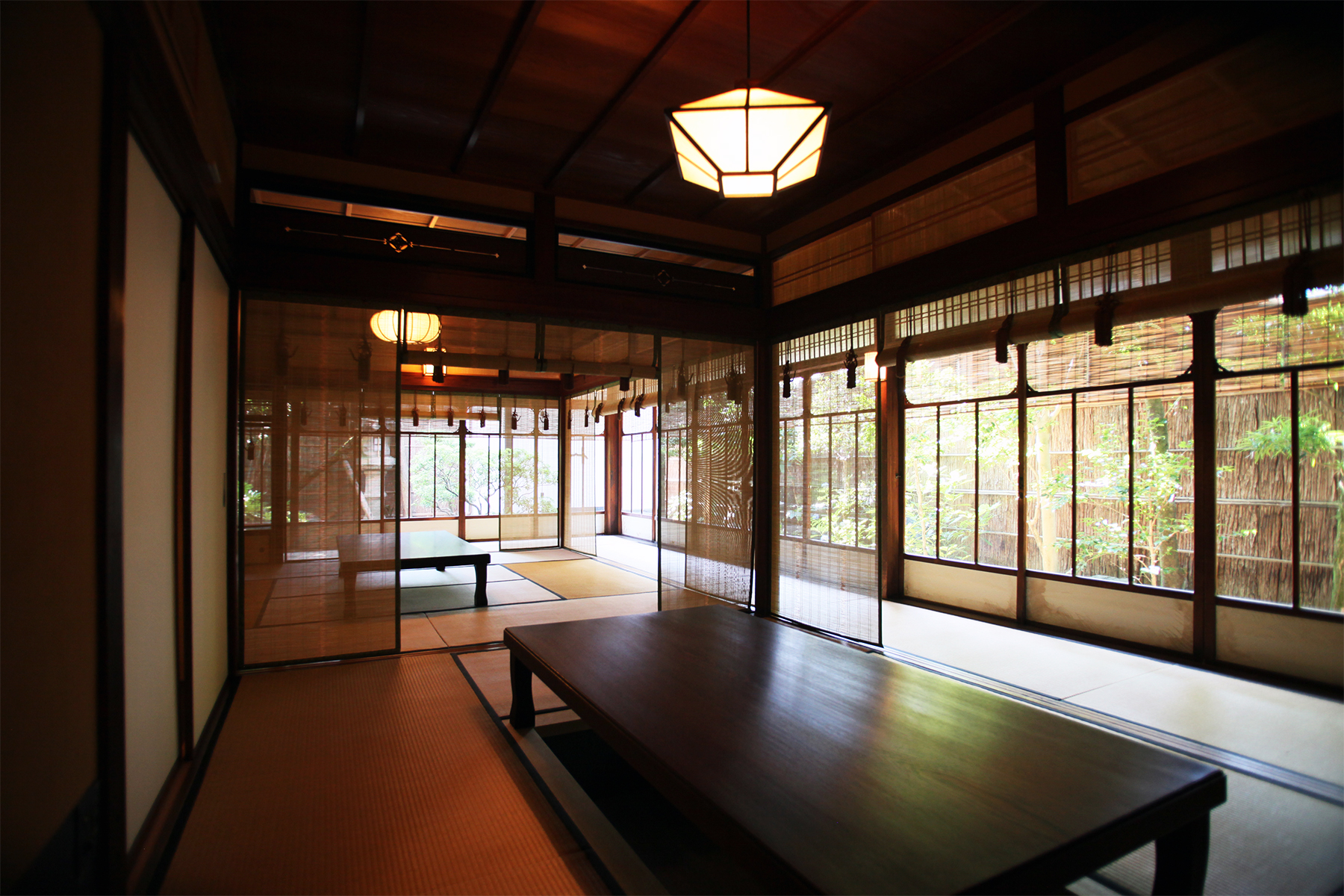
The 1926 home and studio of painter Yamashita Chikusai, restored over about three years. Original details were recovered from old photos and traces, lost parts were filled with new sukiya design, and solar power and underfloor heating were added. It includes the Juraku-an tea room and garden. Designed in-house.

View on official site ↗
Tea-making platform, Myōun-ken
2021年 · Kita Ward, Kyoto

Tea-making platform, Myōun-ken

A two-mat tea platform added to a shop's reception room: the host kneels on tatami while guests sit on chairs for lessons or tea experiences. Swapping the mats allows both sunken-hearth and brazier seasons.

View on official site ↗
Baian, annex of Shiraume
2018年 · Gion, Kyoto

Baian, annex of Shiraume

A former teahouse in Gion converted into an inn for just two groups a day, using sukiya craft to create unhurried, home-like rooms by the Shirakawa stream.

View on official site ↗
Ōkini Geihinkan Shimei Izumoji-tei
2021年 · Kita Ward, Kyoto

Ōkini Geihinkan Shimei Izumoji-tei

A modern Japanese-style residence of main house, Western wing and storehouse, repaired from 2015 with respect for its original character, including new blinds, bamboo-strip shoji and reed doors and a renewed cedar-bark fence.

View on official site ↗

Photos: Yamamoto Kogyo official website

Sukiya workSukiya work

The firm sees the heart of sukiya building in drawing out the character of natural logs and bamboo—no two alike—and placing each where it fits best. Sukiya carpenters and architects handle everything from survey and proposal to design, construction and maintenance.

It also applies traditional skills to the conservation of cultural properties and sees passing that knowledge on as part of its role.

Master carpenterMaster carpenter

Lead master carpenter Koji Hozono received the Kyoto Prefecture award for outstanding traditional-industry craftsmen in 2017. The master judges materials and coordinates roofers, plasterers, tatami makers, joiners and gardeners. His work has appeared on NHK programmes such as the ceiling episodes of "Bi no Tsubo".

Visiting and renting EieitōVisiting and renting Eieitō

Tours are offered to people considering new building or renovation work (by appointment; public tours are also available by reservation).

Besides exhibitions and concerts it serves as a tea-lesson venue and can be rented for tea gatherings, lectures and seminars. In 2019 it was selected for Kyoto City's list of buildings and gardens that colour Kyoto.

GalleryGallery

Kan-an, the chair-seated tea room at Kōshun-an
Arched corridor at Kōshun-an
Interior of Isshi-an
Sloping ceiling of Kyohaku
Small room at Kanare-tei
Juraku-an tea room at Eieitō
Hand-planing the ceiling boards for the Kyoto State Guest House
Jizō hall at Mangetsu-ji, Ōtsu, Shiga (2024)

Photos: Yamamoto Kogyo official website

ServicesWhat they do

  • Design and construction of tea rooms and sukiya
  • Temples, shrines and general wooden buildings
  • Conservation of National Treasures, Important Cultural Properties and other heritage
  • End-to-end service from survey and proposal to construction and maintenance

Selected worksWorks

  • New Koshun-an tea room, Obai-in, Daitoku-ji (May 1998, own design)
  • New Isshi-an tea room, Obai-in, Daitoku-ji (June 1999)
  • New Kyohaku tea room, Guimet Museum of Asian Art, Paris (August 2001)
  • Ceiling of the Kiri-no-ma, Kyoto State Guest House (June 2004)
  • New Kanare-tei tea room, Aichi Expo / Youth Park (December 2004)
  • Renovation of the Japanese houses in the Albert-Kahn Museum garden, France (July 2016)
  • Renovation of the Seishin-tei tea room, Otsuka Shiosai-so, Tokushima (May 2024)
  • Hirano-no-ie Waza Eieito (renovation of a 1926 building)

Company profileProfile

CompanyYamamoto Kogyo Co., Ltd.
Address56 Iwakura Minami-ikeda-cho, Sakyo Ward, Kyoto 606-0005
FoundedApril 1965
RepresentativeYoshihiko Fusho, President
BusinessDesign and construction of tea rooms, sukiya, temples, shrines and houses; conservation of National Treasures and Important Cultural Properties
LicensesConstruction license, Kyoto Governor (Special-4) No. 12434; first-class architect office (04A) No. 01179
Phone+81-75-701-6696
Fax+81-75-701-6393
Hours8:00–17:30 (closed Sundays, holidays and over New Year)
SpecialtyLog-built tea rooms and sukiya; work at the Kyoto State Guest House and the Guimet Museum in Paris; designated contractor of the Kyoto Prefecture cultural-property office

Companies wishing to edit or remove this listing: info@melety.com

More builders
View all
Builder
Kanagawa
Authentic sukiyaFull custom
Quote on request
Builder
Mukō, KyotoIntl.
Est. 1688(元禄元年と伝わる)
Authentic sukiyaFull custom
Quote on request